BONDOWOSO – Komitmen Polres Bondowoso Polda Jawa Timur menjaga stabilitas pangan pascalebaran Idul Fitri terus dilakukan.
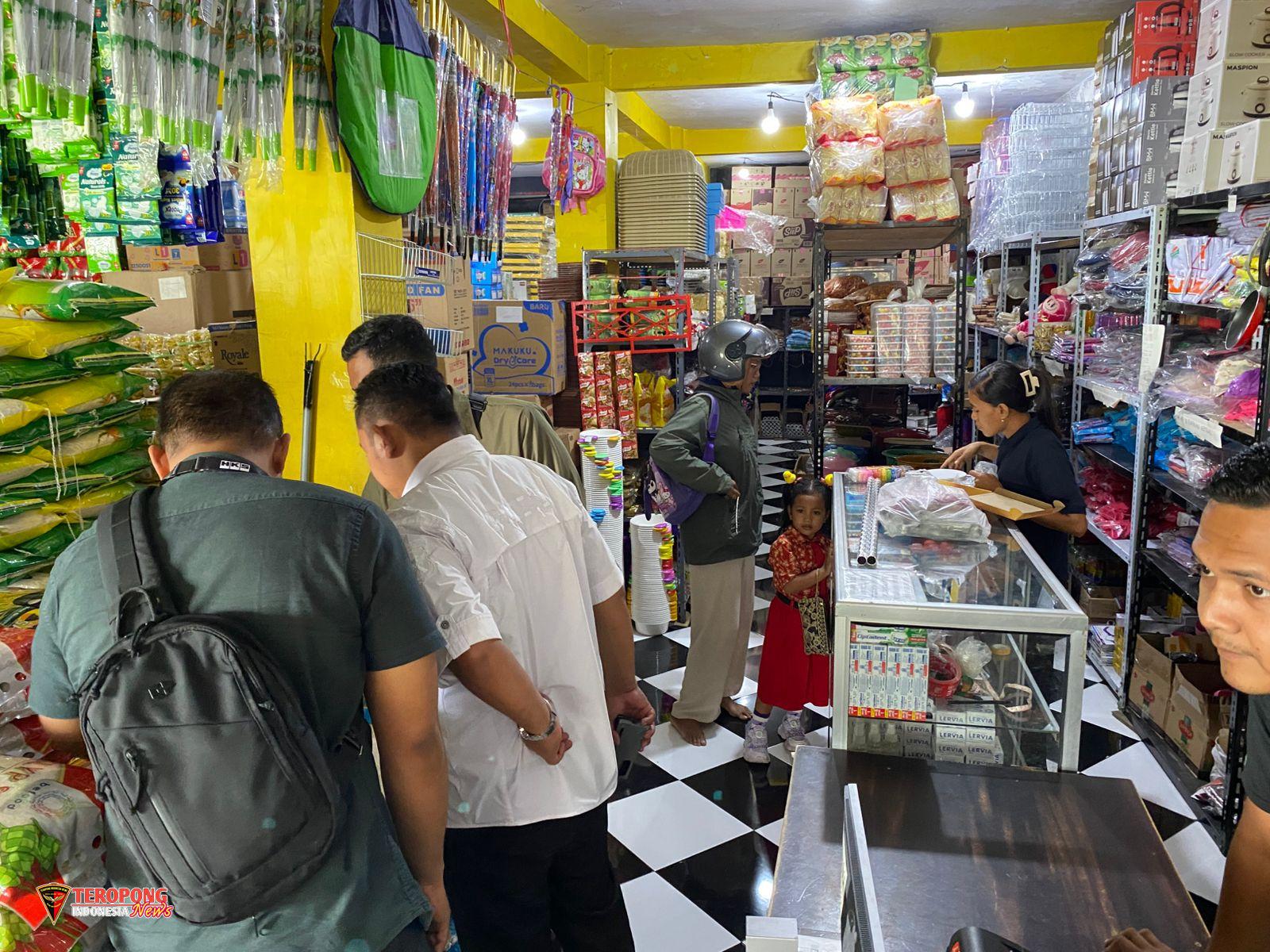
Kali ini Satgas Pangan Polres Bondowoso bersama instansi terkait, melakukan pengawasan dengan turun langsung ke pasar induk di Bondowoso, Selasa (31/3/26).
Pengawasan intensif ini difokuskan pada harga, ketersediaan, serta kualitas bahan pokok penting (Bapokting) guna memastikan kebutuhan masyarakat tetap terpenuhi secara aman dan terjangkau pascalebaran.
Kasat Reskrim Polres Bondowoso, Iptu Wawan Triono, S.H., M.H mengatakan,Tim melakukan pemantauan menyeluruh terhadap sejumlah komoditas utama seperti beras, gula, minyak goreng, telur, serta kebutuhan pokok lainnya.
“Langkah ini menjadi bagian dari upaya preventif untuk mengantisipasi lonjakan harga, kelangkaan barang, hingga potensi penyimpangan distribusi pascaperayaan hari besar keagamaan,” kata Iptu Wawan.
Kasat Reskrim Polres Bondowoso, menegaskan bahwa pengawasan dilakukan secara serius dan berkelanjutan guna melindungi masyarakat dari praktik curang di sektor perdagangan.
“Kami memastikan tidak ada penimbunan, permainan harga, maupun peredaran bahan pokok yang tidak sesuai standar dari menjelang hingga pascalebaran,” terang Iptu Wawan.
Ia mengimbau semua pihak pelaku usaha khususnya bapokting, untuk mematuhi aturan demi menjaga stabilitas ekonomi daerah.
How Visa Became a Trusted Payment Standard in Canadian Online Betting, According to Betlama
Visa has occupied a central role in Canadian commerce for decades, but its integration into online betting represents a distinct chapter in the company’s history — one shaped by regulatory shifts, banking policy decisions, and the gradual normalization of digital gambling as a licensed industry. Understanding how this payment method came to be trusted by both operators and players requires looking at the infrastructure behind the card network, not just the convenience it offers at checkout.
The Regulatory Foundation That Made Visa Viable for Canadian Bettors
Canada’s approach to gambling regulation has never been straightforward. For most of the twentieth century, the Criminal Code of Canada restricted gambling operations to provincially licensed entities, leaving offshore and online platforms in a legal grey zone. This ambiguity created friction with payment processors, including Visa, which had to navigate conflicting signals from federal law, provincial licensing bodies, and their own internal risk frameworks.
The turning point came gradually through the 2010s, as individual provinces began asserting clearer authority over online gambling. Ontario’s move to establish iGaming Ontario in 2021 — a subsidiary of the Alcohol and Gaming Commission of Ontario — was particularly significant. It created a framework under which private operators could obtain provincial licenses, transforming what had been informal offshore transactions into regulated commerce. Once operators were licensed entities subject to audits, AML compliance, and responsible gambling requirements, Visa’s institutional reluctance diminished considerably. Licensed operators now met the same basic criteria Visa applied to any merchant category.
British Columbia, Quebec, and Manitoba had already operated provincial online gambling platforms through entities like PlayNow and Espacejeux. These government-run sites had accepted Visa for years, which established an important precedent: the card network was already processing gambling transactions within Canada through legitimate channels. The expansion of private licensing simply broadened that existing relationship.
How Visa’s Transaction Infrastructure Handles Gambling Payments
From a technical standpoint, Visa does not process transactions directly. It operates as a network intermediary between issuing banks, which hold the cardholder’s account, and acquiring banks, which process payments on behalf of merchants. This distinction matters because the decision to approve or decline a gambling transaction often rests with the issuing bank, not Visa itself. A cardholder whose bank has enabled gambling transactions will typically see Visa deposits approved without friction. A cardholder whose bank applies internal restrictions may see declines even when using a Visa card at a fully licensed site.
Gambling transactions on Visa are classified using Merchant Category Codes, specifically MCC 7995, which covers betting, casino gaming, and lottery operations. This code allows both issuing banks and cardholders to identify gambling charges on statements. It also enables banks to apply specific policies to this category — some Canadian financial institutions allow MCC 7995 transactions by default, while others require cardholders to opt in or contact customer service to enable them. TD Bank, RBC, and Scotiabank have each applied varying policies to this category over time, contributing to the inconsistent experience some Canadian bettors encounter when depositing.
Deposit processing speeds through Visa are typically immediate or near-immediate, which aligns with the expectations of sports bettors who need funds available before an event begins. Withdrawal processing, however, depends heavily on the operator’s internal procedures and the acquiring bank’s settlement timelines. Most licensed Canadian operators quote Visa withdrawal windows of two to five business days, though actual times can vary. Resources like http://www.betlama.com/visa-betting-sites/ document how different licensed operators handle these timelines in practice, offering comparative data that helps bettors set realistic expectations before registering.
Trust Signals That Reinforced Visa’s Position in the Market
Trust in a payment method is not simply a function of brand recognition. For Canadian online bettors, Visa’s position as a preferred deposit method rests on several concrete factors that distinguish it from alternatives like cryptocurrency wallets or prepaid cards.
First, Visa’s Zero Liability Policy provides cardholders with protection against unauthorized transactions. If a cardholder disputes a charge — whether due to fraud, a technical error, or a merchant failure — Visa’s dispute resolution process provides a formal mechanism for recovery. This protection does not extend to voluntary gambling losses, but it does cover scenarios where funds are deposited to a site that subsequently fails to process withdrawals or where unauthorized access occurs. This backstop is absent from many alternative payment methods, including most e-wallets and all cryptocurrency transactions.
Second, Visa’s compliance requirements for merchants are substantial. Operators accepting Visa must maintain PCI DSS (Payment Card Industry Data Security Standard) compliance, which mandates specific controls over how cardholder data is stored, transmitted, and processed. For bettors, this means that any site accepting Visa has cleared a minimum security threshold that unregulated or unlicensed sites typically cannot meet. The presence of Visa as an accepted payment method has, over time, become a proxy indicator of operator legitimacy — not a guarantee, but a meaningful signal within a landscape where scam sites do exist.
Third, Visa’s ubiquity in everyday Canadian commerce reduces the friction of mental accounting. Bettors who use the same card for groceries, streaming subscriptions, and travel feel less psychological distance when using it for licensed gambling. This familiarity reduces the perceived risk of the transaction and contributes to higher deposit completion rates, which is why licensed operators actively promote Visa acceptance as a feature rather than simply listing it in the fine print.
Betlama’s research into Canadian payment preferences has consistently found that Visa ranks among the most requested deposit methods, particularly among bettors over thirty-five who are less likely to maintain dedicated e-wallet accounts or hold cryptocurrency. The demographic alignment between Visa users and the core sports betting audience in Canada reinforces the payment method’s continued dominance despite the proliferation of alternatives.
Challenges and Limitations That Remain
Despite its established position, Visa is not a frictionless solution for Canadian online bettors. The issuing bank problem described earlier remains unresolved at the network level. Visa cannot compel Canadian banks to approve gambling transactions, and individual bank policies continue to vary. Some cardholders have reported that their banks began declining gambling deposits without prior notice, a consequence of internal policy updates that are rarely communicated proactively to customers.
Withdrawal limitations represent another persistent issue. While most licensed operators accept Visa for deposits, a smaller subset supports Visa for withdrawals. This asymmetry forces bettors to maintain secondary payment methods for cashing out, which undermines the simplicity that makes Visa attractive in the first place. The gap exists partly because of the higher processing costs associated with push payments to cards compared to standard pull transactions, and partly because some acquiring banks in the gambling sector do not support card-to-card disbursements under their merchant agreements.
Currency handling also warrants attention. Canadian bettors depositing in CAD to operators whose base currency is USD or EUR may encounter foreign exchange fees applied by their issuing bank, typically ranging from 1.5 to 3 percent of the transaction value. These fees are not disclosed by the operator and are not visible until the cardholder reviews their monthly statement. For high-volume bettors, these costs accumulate meaningfully over time and represent an implicit cost that alternatives like Interac e-Transfer, which operates natively in CAD, do not carry.
Betlama’s analysis of licensed Canadian operators has noted that the platforms most transparent about these limitations — disclosing potential issuing bank declines, withdrawal timelines, and currency conversion costs upfront — tend to generate stronger long-term user retention. Transparency about payment mechanics, rather than oversimplified messaging about instant deposits, correlates with reduced complaint volumes and higher trust ratings in independent review aggregators.
Visa’s role in Canadian online betting is ultimately a reflection of the broader maturation of the regulated gambling market. As provincial frameworks have clarified the legal status of licensed operators, and as those operators have invested in compliance infrastructure, the conditions that once made Visa reluctant to engage with the sector have gradually dissolved. The card network’s presence in this market is now structural rather than provisional — embedded in the transaction flows of millions of Canadian bettors who treat a Visa deposit with the same normalcy as any other digital purchase. The remaining friction points are real but manageable, and the trajectory of both regulation and payment technology suggests they will narrow further as the market continues to consolidate around licensed, compliant operators.
Di lokasi terpisah, Kapolres Bondowoso AKBP Dr Aryo Dwi Wibowo, S.H., S.I.K., M.M menekankan bahwa kegiatan ini merupakan bentuk kehadiran negara dalam menjamin kesejahteraan masyarakat.
“Kami ingin memastikan distribusi bahan pokok berjalan lancar, harga tetap terkendali, dan masyarakat merasa aman dalam memenuhi kebutuhan sehari hari,”tegas AKBP Aryo.
Pengawasan terpadu ini tidak hanya bertujuan menjaga kestabilan pasar, tetapi juga memberikan rasa tenang bagi masyarakat setelah merayakan Idul Fitri.
“Dengan ketersediaan bahan pokok yang terjaga dan harga yang stabil, diharapkan roda perekonomian di Bondowoso tetap bergerak secara sehat,” ungkapnya.
Langkah proaktif ini menjadi bukti nyata sinergi antar instansi dalam menjaga ketahanan pangan daerah, sekaligus memperkuat kepercayaan masyarakat terhadap upaya pemerintah dalam melindungi kepentingan publik.
TEROPONG INDONESIA NEWS DI DIRIKAN SEJAK TANGGAL 22 DESEMBER 2020 oleh Wahyu dan Haji Darmo di bawah Naungan PT Teropong Multi Media,
( Call Redaksi : 085236384228 )