Sumsel – Menindaklanjuti surat konfirmasi media teropong Indonesia news tanggal, 9/5/2025 dengan nomor: 263/TIN/V/2025 atas dugaan persekongkolan Gratifikasi antara Bupati Musi Rawas ( R) dengan kepala Dinas PU BM pada pekerjaan proyek Cor Beton anggaran tahun 2021 sebesar 10 Miliar.
Pada berita terdahulu tersebut, media TIN telah menjelaskan kronologi yang terjadi pada kasus dugaan kasus gratifikasi pada Dinas PU BM kabupaten Musi Rawas, dimana paket pekerjaan proyek Cor Beton sebesar Rp 10 Miliar tersebut melibatkan orang dekat Bupati Musi Rawas ( keponakan Bupati Musi Rawas R.EF dan E ) untuk melicinkan jalannya pekerjaan proyek Cor Beton dengan pihak calon kontrakan.
How No Deposit Mobile Bonuses Evolved in the Canadian Casino Market, Casizoids Explores
The Canadian online casino market has undergone substantial structural changes over the past fifteen years, and few promotional mechanisms illustrate those shifts more clearly than the no deposit mobile bonus. What began as a rudimentary acquisition tool deployed by offshore operators has matured into a carefully calibrated instrument shaped by provincial regulation, shifting consumer behavior, and the rapid dominance of smartphone-based gambling. Understanding how this evolution unfolded requires looking beyond the bonuses themselves and examining the regulatory, technological, and competitive forces that gave them their current form.
The Early Landscape: Offshore Operators and Unregulated Incentives
Before provincial governments began asserting meaningful control over online gambling, Canadian players were largely served by offshore operators licensed in jurisdictions such as Malta, Gibraltar, and Kahnawake. The Kahnawake Gaming Commission, established in 1996 on Mohawk Territory in Quebec, was for many years the most prominent licensing body with direct ties to Canadian territory, and it issued licenses to dozens of operators targeting Canadian consumers throughout the 2000s.
During this period, no deposit bonuses existed primarily in desktop form. Operators would offer small amounts of free play, typically between CAD $5 and CAD $20, credited automatically upon account registration. The mechanics were straightforward but the terms were often opaque — wagering requirements of 50x or higher were not unusual, and withdrawal caps frequently rendered the bonuses nearly impossible to convert into real cash. There was no standardized framework governing how these offers had to be presented or fulfilled, which created significant variability in player experience.
Mobile gambling was not yet a serious consideration. The first iPhone launched in 2007, and it was not until approximately 2010 to 2012 that mobile browser technology and native app development reached a point where casino gameplay on smartphones was genuinely viable. The transition to mobile fundamentally changed what operators needed from their bonus structures.
The Mobile Shift and Its Effect on Bonus Design
Between 2012 and 2016, mobile traffic to online casino platforms in Canada grew dramatically. Industry research from that period indicated that mobile devices accounted for less than 15 percent of online casino sessions in 2011, but that figure had climbed past 40 percent by 2015 and continued rising. Operators recognized that acquiring a mobile user required a different approach than acquiring a desktop user. Mobile sessions tended to be shorter, more fragmented, and driven by impulse — meaning the bonus had to deliver immediate value perceptible on a small screen.
This drove the development of mobile-specific no deposit bonuses, often structured as free spins rather than bonus cash. Free spins were visually intuitive on mobile interfaces, they could be tied to specific slot titles optimized for touchscreen play, and they gave operators a way to promote particular game providers within their portfolio. By 2016, free spin packages of 10 to 50 spins awarded without a deposit had become a standard feature across most operators serving Canadian players. The shift also prompted operators to simplify their terms — not out of generosity, but because complex multi-page terms and conditions were practically unreadable on mobile screens and were generating player complaints and chargebacks.
Platforms analyzing the Canadian market during this transition, including the review and analysis site Casizoids, documented how operators began segmenting their bonus offerings by device type, with distinct no deposit packages crafted specifically for mobile acquisition funnels. Readers looking to understand how these distinctions manifest in current offers can check it out through Casizoids, where the evolution of mobile-specific terms is tracked with reference to specific operators and their historical offer structures.
Provincial Regulation and the iGaming Ontario Framework
The most consequential regulatory development in the Canadian online casino market occurred in April 2022, when iGaming Ontario launched as a subsidiary of the Alcohol and Gaming Commission of Ontario. For the first time, a major Canadian province created a framework under which private operators could legally offer online casino products to residents, provided they entered into an operating agreement with iGaming Ontario and met specific standards for responsible gambling, advertising, and financial transparency.
The launch of iGaming Ontario had direct implications for no deposit mobile bonuses. Operators entering the regulated market were now subject to advertising standards enforced by the Alcohol and Gaming Commission, which required that bonus terms be clearly disclosed in advertising materials. The days of prominently displaying a free bonus amount while burying wagering requirements in footnotes became legally untenable for licensed operators. This created a measurable divergence between the bonus practices of regulated operators within Ontario and the offshore operators that continued to accept Canadian players from other provinces without provincial licensing.
By the end of 2022, iGaming Ontario reported that over 30 operators had been approved to offer legal online casino products in the province, with combined player registrations exceeding 400,000 in the first year of operation. Within this regulated cohort, no deposit mobile bonuses became more modest in nominal value but more transparent in structure. A typical regulated offer might consist of CAD $10 in bonus funds or 20 free spins with a 30x wagering requirement clearly stated upfront, compared to the inflated offshore offers that advertised larger amounts under far more restrictive conditions.
Casizoids has been among the platforms tracking this bifurcation in the Canadian market, noting that players in Ontario now operate in a fundamentally different bonus environment than those in provinces like Alberta or British Columbia, where no equivalent private operator framework yet exists and offshore operators remain the primary option for online casino play.
Current Trends and What Drives Modern No Deposit Mobile Offers
As of the mid-2020s, no deposit mobile bonuses in the Canadian market reflect several converging pressures. Responsible gambling requirements have become more integrated into bonus mechanics — operators in regulated markets are increasingly required to implement deposit limits, session time reminders, and self-exclusion tools as preconditions for offering any bonus, including no deposit variants. This means the bonus is no longer simply a marketing instrument but is embedded within a broader player welfare framework.
Technology has also changed what is possible. The widespread adoption of native casino apps, combined with improvements in mobile payment infrastructure including Interac e-Transfer and digital wallets, has made the onboarding process faster. No deposit bonuses now frequently activate automatically upon app download and account verification, sometimes within seconds, without requiring manual bonus code entry. This frictionless delivery model has become an expectation rather than a differentiator.
Game provider partnerships have become another driver of no deposit mobile bonus design. Software developers such as NetEnt, Pragmatic Play, and Evolution Gaming have commercial agreements with operators that include promotional support for new game launches. A no deposit free spin offer tied to a newly released slot title serves both the operator’s acquisition goals and the provider’s launch objectives. This explains why free spin bonuses are frequently restricted to a single game or a small group of titles — it is not arbitrary but reflects underlying commercial arrangements between operators and developers.
The competitive pressure from social casino apps and sweepstakes casino models has also influenced how traditional licensed operators structure their no deposit offers. Platforms operating under sweepstakes mechanics, which are legal across Canada without provincial gaming licenses, offer persistent free-play currencies that function similarly to no deposit bonuses but without the same regulatory constraints. This has pushed licensed operators to improve the perceived value and accessibility of their own no deposit mobile offers to remain competitive for the same pool of casual players.
The trajectory of no deposit mobile bonuses in Canada is ultimately a reflection of the market’s gradual maturation. What was once an unregulated promotional free-for-all dominated by offshore operators has become a more structured and monitored environment, at least in Ontario, with meaningful standards around transparency and player protection. The bonus itself has not disappeared — it remains an effective acquisition mechanism — but its design, delivery, and legal context have been transformed by over a decade of technological change and incremental regulatory development. Platforms like Casizoids continue to provide comparative analysis of how these offers differ across regulated and unregulated market segments, offering a useful lens through which Canadian players can evaluate what any given no deposit mobile bonus actually represents in practical terms.
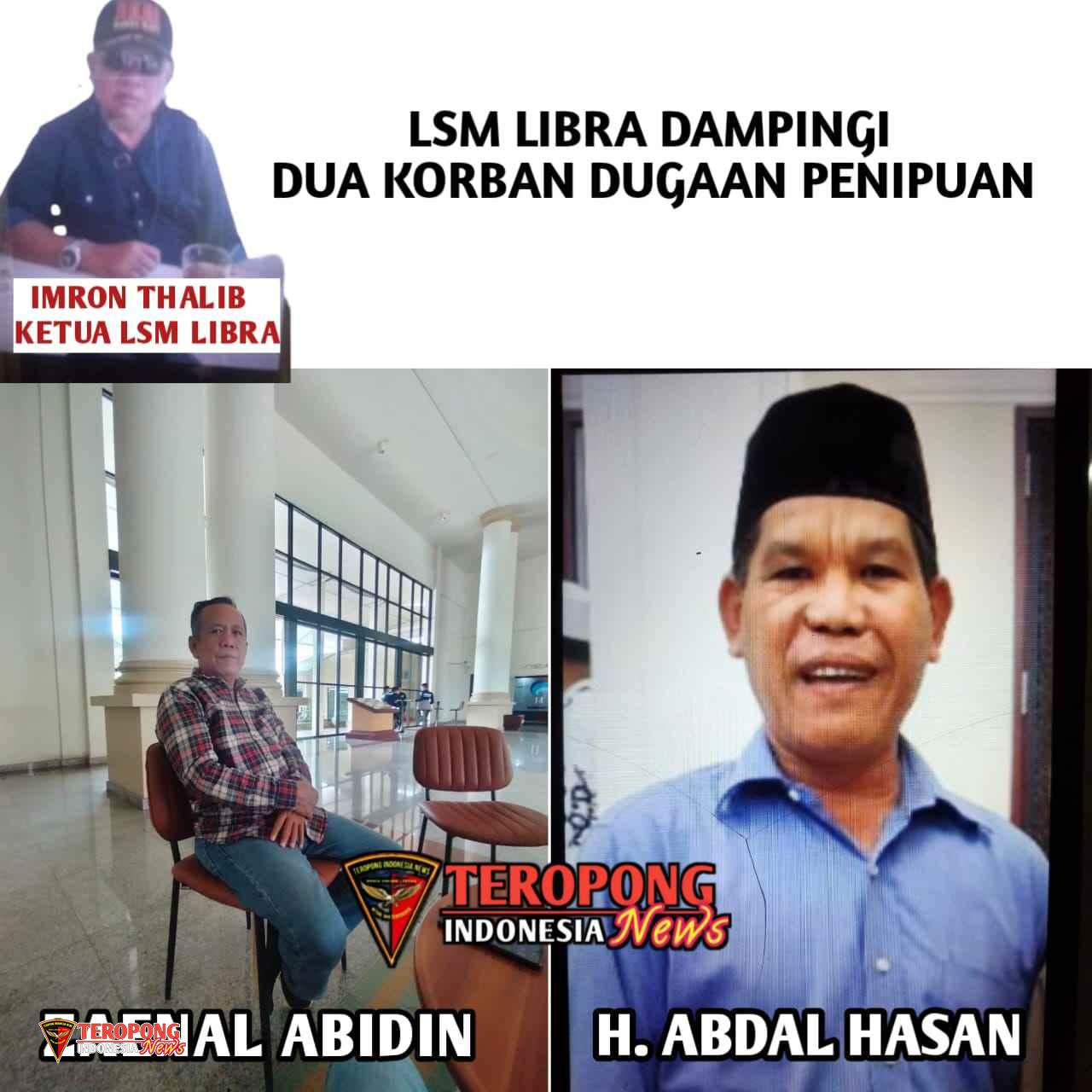
Sehingga terjadi kesepakatan antara Zainal Abidin dan H. Abdal yang disebut sebagai pihak pertama dan Rizal Syamsul dan Eka Fitriani di sebut pihak kedua yang tertuang dalam surat perjanjian kedua belah pihak. Maka terjadi lah pihak pertama menyetor uang sebesar Rp 750.000.000,00 ( tujuh ratus lima puluh juta rupiah) kepada pihak kedua
Dalam surat konfirmasi media TIN kepada kepala Dinas PU BM kabupaten Musi Rawas, atas dugaan persekongkolan gratifikasi dengan Bupati Musi Rawas yang terkesan BUNGKAM. Padahal dugaan gratifikasi ini masuk dalam kejahatan yang luar biasa ( Extra ordinary Crime). Patut diduga telah melanggar UU nomor 31 tahun 1999 dan diubah menjadi UU nomor 20 tahun 2001 tentang tindak pidana korupsi.
Dalam berita terdahulu juga dugaan kasus gratifikasi tersebut, LSM Libra ikut angkat bicara dalam hasil investigasinya . Jika kepala Dinas PU BM tidak secepatnya menyelesaikan dugaan kasus gratifikasi ini dengan Bupati Musi Rawas dengan pihak kontraktor, maka LSM LIBRA akan segera melakukan aksi Demo Damai di kejaksaan Tinggi Provinsi Sumatera Selatan, dan jika proses hukumnya lambat, maka LSM LIBRA akan melakukan aksi Demo Damai ke Jakarta seperti Di Kejagung, KPK dan Mabes Polri.
Menurut Ketua LSM Libra bahwa ada beberapa petunjuk bukti awal untuk kami segera membuat laporan ke pihak kejaksaan Tinggi Provinsi Sumatera Selatan, dalam dugaan kasus gratifikasi pada pekerjaan proyek Cor beton tahun 2021 pada PU BM kabupaten Musi Rawas, antara Bupati, Kepala dinas, calon kontraktor dan penghubung / makelar pekerjaan proyek tersebut.